AC repair service
AC Service Checklist: What's Actually Done During a Service Visit
A clear, step-by-step checklist of what a professional AC service includes — filter cleaning, coil cleaning, gas pressure check, drain flush, electrical inspection — so you know exactly what to expect and how to judge the work.
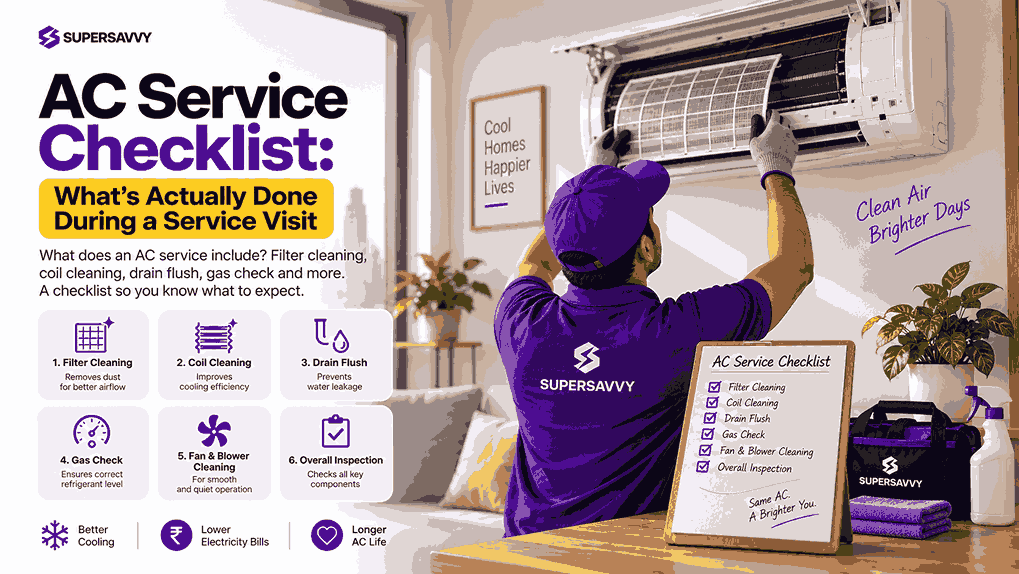
AC Service Checklist: What's Actually Done During a Service Visit
You’ve booked an AC service. But what exactly will the technician do once they arrive? Many people schedule regular servicing without knowing what it actually covers — and that makes it harder to judge whether the work was done properly. Here’s a clear, step-by-step breakdown of what a professional AC service includes, what the technician checks, and what you should keep an eye on.
What a standard AC service covers
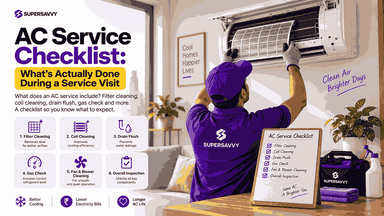
A routine service — sometimes called a “basic” or “dry” service — is maintenance, not repair. The goal is to keep the unit running efficiently so problems don’t develop in the first place. Here’s what it typically includes, in the order most technicians work through:
1. Filter cleaning or replacement
The indoor unit’s filters trap dust, hair and airborne particles. A clogged filter restricts airflow, forces the compressor to work harder, and raises your electricity bill. The technician removes the filters, washes them (or replaces them if they’re damaged), and lets them dry before refitting. This single step often makes the most noticeable difference to cooling performance.
2. Evaporator coil cleaning
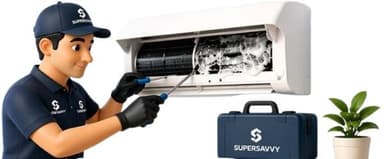
The evaporator coil sits behind the filters inside the indoor unit. Even with clean filters, fine dust accumulates on the coil fins over months. The technician uses a soft brush or a foam-based coil cleaner to remove buildup without bending the delicate fins. A clean evaporator absorbs heat faster, which means cooler air at the same energy cost.
3. Condenser (outdoor unit) check
The outdoor unit expels heat. Dust, leaves and grime on the condenser coil reduce its ability to release heat, which strains the compressor. The technician clears debris around the unit, inspects the fan, and cleans the condenser coil — usually with a dry brush during a standard service, or a water jet for a deeper clean.
4. Drain line and tray flush
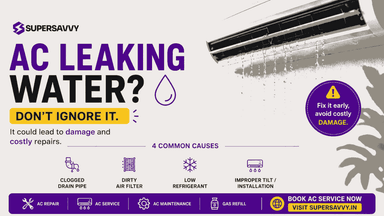
Condensation from the indoor unit drains through a pipe into a tray and then outside. If the drain is blocked by dust or algae, the water backs up and leaks inside your room. The technician flushes the line, clears the tray, and checks that water flows freely.
5. Refrigerant (gas) pressure check
The technician connects a pressure gauge to the service port and checks whether the refrigerant level is within the normal operating range. This doesn’t always involve topping up gas — it’s a diagnostic step. If pressure is low, it may indicate a slow leak that needs separate attention. A gas top-up or refill is usually a separate service with its own charges.
6. Electrical connections and controls
Loose connections can cause intermittent failures or even electrical faults. The technician inspects the wiring at the indoor and outdoor units, tightens terminals if needed, and checks that the thermostat sensor, capacitor and other controls are responding correctly. This step is quick but catches problems early.
7. Overall performance test
With everything cleaned and checked, the technician runs the AC and measures the temperature difference between the air going in and the cooled air coming out. A healthy AC should produce a meaningful difference (the exact figure depends on the ambient temperature, humidity and the unit’s rated capacity). If the gap is too small after a service, it usually points to a refrigerant or compressor issue that goes beyond maintenance.
When you need more than a standard service
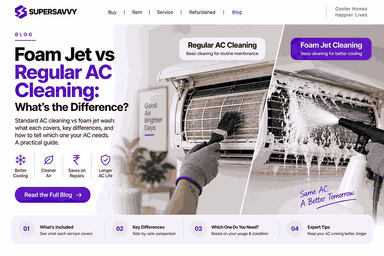
A standard service handles routine maintenance. But if the coils are heavily caked, if it’s been more than a year since the last service, or if the AC is producing a noticeable smell, a deep clean or jet wash is more appropriate. This involves:
High-pressure water applied directly to the evaporator and condenser coils.
Chemical cleaning agents to dissolve stubborn grease and biological buildup (mould, algae).
A full drainage-system flush.
Thorough drying before the unit is reassembled and tested.
A jet wash takes longer and costs more than a standard service, but it restores cooling performance more effectively when the unit is heavily soiled. If you’re unsure which you need, a technician can advise after inspecting the indoor unit.
How long does a service take?
A standard service on a single split or window AC usually takes 30 to 60 minutes. A deep clean or jet wash takes longer — around 60 to 90 minutes — because the coil soaking and drying steps can’t be rushed. If you have multiple units, each adds roughly the same time.
What to look for when the technician is done
You don’t need technical knowledge to tell whether a service was done properly. Check:
Filters are dry and refitted. They shouldn’t be wet when put back.
The drain is flowing. Ask the technician to show you that water drains freely.
The AC feels noticeably cooler. Stand at the vent; the air should feel distinctly cold, not lukewarm.
No unusual noise. The unit should run quietly and smoothly after servicing.
The area is clean. A professional technician protects the area during work and cleans up afterwards.
How Supersavvy handles AC servicing
Supersavvy uses in-house, trained technicians who follow a structured service process. AC service charges start from ₹400 (indicative — the final cost depends on the unit type, condition and any additional work needed). The aim is to arrange a technician visit within approximately one hour of booking where operationally possible, and pricing is shared transparently before the work begins. Repairs done during a service visit carry a 90-day warranty, subject to the applicable terms.
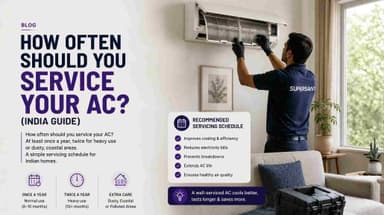
If you’re unsure how often you should be servicing your AC, the general guideline is at least once before each heavy-use season — but the right frequency depends on how much you use it and the dust levels in your area.
To book an AC service in Mumbai or any of Supersavvy’s service cities, you can schedule online and a technician will be assigned to your booking.
Frequently asked questions
What is included in a basic AC service?Filter cleaning, evaporator coil cleaning, condenser unit check, drain line flush, gas pressure check, electrical inspection and an overall performance test.
How is a deep clean different from a regular service?A deep clean or jet wash uses high-pressure water and chemical cleaning on the coils, which removes heavier buildup that a dry brush can’t. It takes longer and costs more, but it’s more effective when the unit hasn’t been serviced in a long time.
Does an AC service include gas refilling?Not usually. A standard service includes a gas pressure check, but if the level is low, a top-up or refill is a separate job with its own charges.
How long does an AC service take?Around 30 to 60 minutes for a standard service on a single unit. A deep clean or jet wash can take 60 to 90 minutes.
How much does an AC service cost at Supersavvy?AC service at Supersavvy starts from ₹400. The final cost depends on the unit type, condition and any additional work. Pricing is shared transparently before the work begins.
Need an AC Today?
Buy refurbished, pre-owned, or second-hand ACs at the best rates in Mumbai.
✅ Free installation support
✅ Instant buyback available
📞 Call/WhatsApp: +91 7098110110








Navigation links
HomeAbout UsMy BookingsBlogsContact UsRaise a ComplaintComplaintsPartner AppTechnical AcademySupport ChatAll Rights Reserved ©
