You notice a puddle forming under the indoor unit, or water dripping down the wall while the AC runs. It's a common problem — and the good news is that an AC leaking water is usually caused by something simple like a blocked drain or a dirty filter, not a major fault. Often you can sort it out yourself, or at least know exactly what to tell the technician.
This guide explains why an air conditioner leaks water indoors, the safe checks you can do at home, what you should not attempt, and when it's time to call a professional.
The quick answer
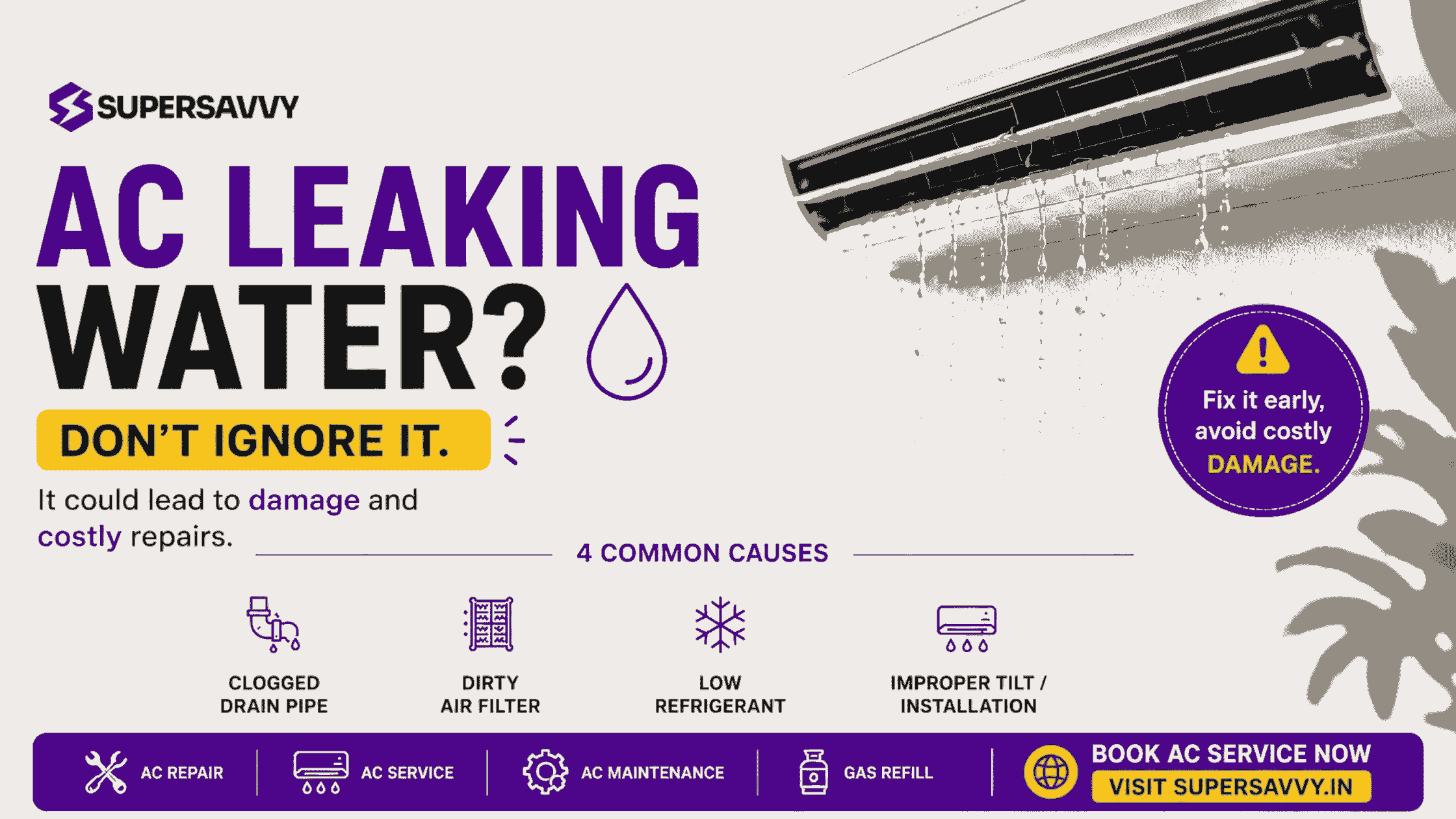
Most indoor water leaks come down to a clogged condensate drain, a dirty air filter, or a unit that isn't tilted correctly. As the AC cools, it pulls moisture from the air; that water is meant to run out through a drain pipe. When the drain is blocked or the coil freezes and melts, the water overflows into the room instead. If clearing the filter and the drain doesn't fix it — or you see ice on the pipes — the cause is likely low refrigerant or an installation fault, which needs a technician.
Common reasons an AC leaks water
Blocked condensate drain. The most common cause. Dust, dirt and algae build up in the drain pipe until water can't flow out, so it backs up and spills from the indoor unit.
Dirty air filter. A clogged filter chokes airflow over the cooling coil. The coil then gets too cold and freezes; when it melts, the water overwhelms the drain tray and drips out.
Low refrigerant (gas). Low gas also makes the coil freeze and then melt, causing a leak. You may notice weak cooling and ice on the copper pipes alongside the water.
Wrong tilt or poor installation. The indoor unit should sit very slightly tilted towards the drain side. If it's level or tilted the wrong way — often after a hurried install — water runs back into the room.
Cracked or rusted drain tray. The tray that catches condensation can crack or corrode over time and let water through.
Disconnected or damaged drain pipe. If the pipe has come loose or is broken behind the unit, water escapes before it reaches the outlet.
Very humid weather. During the monsoon or in humid, coastal cities, the AC produces much more condensation. A drain that's only partly clogged can cope in mild weather but overflow when humidity spikes.
Simple checks you can do yourself
These are safe for any home user. Switch the AC off first to stop it running while water is leaking, and keep a cloth and bucket handy.
Clean or replace the air filter. Open the front panel of the indoor unit, slide out the filters, and wash off the dust. In dusty conditions or heavy summer use, do this every couple of weeks — it prevents both leaks and weak cooling.
Check the outdoor end of the drain pipe. Find where the drain pipe exits outside and make sure it isn't blocked, kinked, submerged in water, or clogged with dirt or insects. Clearing a visible blockage often fixes the leak.
Look at how the unit sits. If water drips mainly from one side, the indoor unit may not be tilted correctly — note this for the technician rather than trying to re-fix it to the wall yourself.
Wipe the tray area you can safely reach. Clear any visible dirt around the accessible drain outlet, but don't force anything into the unit.
In India, both split and window ACs can leak for these reasons. On a window AC the water usually drains towards the back outdoors, so an indoor leak often points to a wrong slope or a blocked tray; on a split AC it's most often the drain pipe or filter.
What you should NOT try yourself
To stay safe and avoid making things worse, leave these to a technician:
Anything involving refrigerant or "gas top-up" — the sealed system needs a professional with the right tools.
Re-mounting or re-tilting the indoor unit on the wall.
Opening up the coil, drain pump or the unit's internal electricals.
Poking wires or sharp tools into the unit to clear a deep blockage.
Water and electricity together also mean you should never keep running an AC that's leaking onto a plug point or wiring.
When to call a professional
Book a technician if:
The leak continues after you've cleaned the filter and cleared the outdoor drain.
You can see ice or frost on the copper pipes or the coil, or cooling has gone weak — both point to low refrigerant.
The unit was recently installed and started leaking, which suggests an installation or tilt fault.
Water is coming from the electrical side of the unit, or the drain tray looks cracked.
The drain is blocked deep inside and needs to be flushed or pumped out.
These usually need proper diagnosis, drain cleaning, a top-up or a re-fit. If the air also isn't cold, that's a separate symptom — our guide on how often you should service your AC explains how regular servicing prevents most clogged drains and frozen coils in the first place.
Getting it repaired with Supersavvy
Supersavvy provides AC repair across Mumbai and our other service cities, using in-house, trained technicians. Pricing is shared transparently before or during the work, and any repairs carried out are covered by a 90-day warranty, subject to the applicable terms. Where it is operationally possible, we aim to arrange a technician visit within approximately one hour of booking. If the leak won't stop after the basic checks, you can have a technician repair your AC in a few minutes online.
Frequently asked questions
Why is my AC leaking water inside the room?Most often a clogged condensate drain or a dirty air filter, sometimes low refrigerant or an incorrectly tilted indoor unit. As the AC cools it collects moisture, and if that water can't drain out it overflows indoors.
Can I fix an AC water leak myself?You can safely clean the air filter and clear the outdoor end of the drain pipe, which solves many leaks. Anything involving refrigerant, re-mounting the unit or the internal electricals should be left to a technician.
Should I turn off my AC if it's leaking water?Yes. Switch it off to prevent water damage and to avoid water reaching any electricals, then check the filter and drain before running it again.
Why does my AC leak more during the monsoon?High humidity means the AC pulls far more moisture from the air, so a drain that's slightly clogged can cope in dry weather but overflow when humidity is high.
Is a small AC water leak serious?A minor leak from a blocked drain is common and usually easy to fix, but don't ignore it — ongoing leaks can damage walls and, if water reaches wiring, become a safety risk.
In short: start with the air filter and the outdoor drain, switch the AC off while it's leaking, and check how the unit is tilted. That clears most cases. When there's ice on the pipes, an install fault or an internal blockage, a trained technician is the safe and reliable fix.