AC repair service
AC Making Noise? What Each Sound Means and When to Worry
Your AC is making an unusual noise — rattling, buzzing, hissing, grinding or banging? Here's what each sound means, whether it's serious, and when you need a technician.
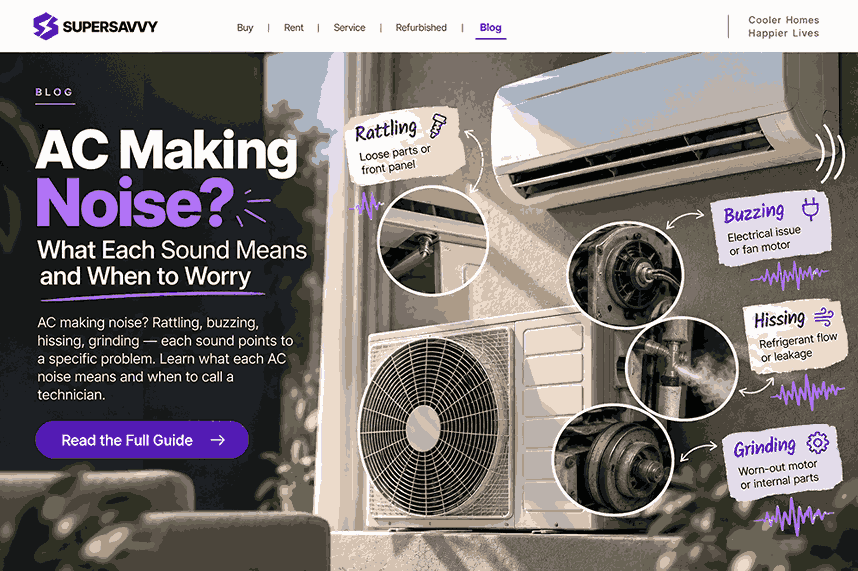
AC Making Noise? What Each Sound Means and When to Worry
A well-functioning AC is mostly quiet — a low, steady hum from the outdoor unit and gentle airflow from the indoor unit. When new sounds appear — rattling, buzzing, hissing, grinding — they almost always mean something specific. Identifying the sound helps you understand whether it’s a minor issue you can address yourself or something that needs a technician.
Rattling or vibrating
What it sounds like: A loose, shaky rattle — often from the outdoor unit, sometimes from the indoor unit.
Common causes:
Loose screws or panels. Vibration from the compressor and fan motor can gradually loosen the cabinet screws and side panels. Tighten them and the rattle usually stops.
Debris in the outdoor unit. Leaves, twigs or small stones can fall through the grille and hit the fan blades. Switch off the AC, remove the debris, and check if the fan spins freely.
Loose fan blade. If the fan blade’s mounting nut has loosened, it wobbles and rattles against the housing. This needs tightening (outdoor unit) or a technician for the indoor blower wheel.
Rubber mounts worn out. The compressor sits on vibration-dampening rubber mounts. Over years these harden, crack and lose their cushioning, transmitting vibration to the chassis.
Severity: Usually low. But a rattle that gets progressively louder could indicate a failing component — don’t ignore it indefinitely.
Buzzing or humming (louder than normal)
What it sounds like: A continuous electrical buzz or hum, louder than the usual compressor tone — typically from the outdoor unit.
Common causes:
Contactor issue. The contactor is an electrical relay that switches the compressor on and off. A worn or pitted contactor can buzz continuously. This is an electrical component and should be replaced by a technician.
Capacitor starting to fail. A failing run or start capacitor can cause a buzzing sound as the motor struggles to start or maintain speed. If the outdoor unit hums but the fan doesn’t spin, a dead capacitor is the likely cause.
Fan motor issue. A motor with worn bearings may hum loudly without spinning properly. The AC may trip on overload shortly after.
Electrical connection. Loose wiring at the terminal block can arc and buzz. This is a safety concern and needs immediate attention.
Severity: Medium to high. Electrical buzzing should not be left unattended — it often precedes a breakdown or can be a fire risk (loose wiring).
Clicking
What it sounds like: Repeated clicking — either rapid clicks when starting/stopping, or a persistent tick-tick-tick.
Common causes:
Normal relay clicking. A single click when the compressor starts or stops is normal — that’s the relay engaging or disengaging. No action needed.
Thermostat or control board fault. Continuous rapid clicking from the indoor unit usually means the control board is trying to send a signal but failing — the board or a sensor may be faulty.
Obstructed fan. If something is intermittently catching the fan blade, you’ll hear a rhythmic clicking or ticking that matches the fan speed.
Severity: Depends. A single click on start/stop is normal. Continuous clicking needs diagnosis.
Hissing or bubbling
What it sounds like: A steady hiss (like air escaping) or a gurgling/bubbling sound from the refrigerant lines or indoor unit.
Common causes:
Refrigerant leak. A hiss from the copper pipes, joints or indoor coil can indicate signs of an AC gas leak. If the AC is also not cooling well, this is likely the cause. Refrigerant leaks need professional repair — the leak must be located, sealed and the gas recharged.
Normal expansion valve sound. A brief, faint hissing when the compressor cycles on or off is the refrigerant changing pressure through the expansion valve. This is normal.
Internal valve issue. A constant loud hiss from the outdoor unit could mean a reversing valve or service valve is leaking internally. This needs a technician.
Severity: High if accompanied by reduced cooling. A refrigerant leak loses gas progressively, and running the AC with low gas damages the compressor.
Grinding or squealing
What it sounds like: A harsh metallic grinding, or a high-pitched squeal — typically from the indoor unit’s blower or the outdoor fan motor.
Common causes:
Worn motor bearings. Both the indoor blower motor and outdoor fan motor have bearings that wear over time. Once worn, metal rubs on metal, creating a grinding or screeching sound. The motor needs servicing or replacement.
Blower wheel misalignment. If the indoor blower wheel shifts on its shaft, it scrapes against the housing. This produces a continuous scraping sound that worsens over time.
Dry motor shaft. Some older motors need periodic lubrication. A squealing sound at startup that fades can indicate a dry shaft.
Severity: High. Grinding means mechanical wear is actively happening. Continuing to run the AC accelerates the damage.
Banging or clanking
What it sounds like: A sudden, loud bang or repetitive clanking — usually from the outdoor unit.
Common causes:
Loose compressor mount. The compressor is the heaviest component. If its internal mounts or springs fail, the compressor body can shift and bang against the chassis during operation.
Broken fan blade. A cracked or broken fan blade creates an imbalanced rotation, producing a rhythmic clanking. Check the outdoor fan — if a blade is visibly damaged, stop the AC and call a technician.
Foreign object. Occasionally an object (a fallen nut, a piece of ice in cold climates, a trapped insect nest) gets caught in the fan path. Switch off and inspect.
Severity: High. Banging typically means something has broken or come loose. Turn the AC off to prevent further damage.
Dripping or water sounds
What it sounds like: Water dripping inside the indoor unit, or a sloshing/gurgling sound.
Common causes:
Condensate dripping onto the fan or base tray. If the drain pipe is partially blocked, condensate accumulates and drips inside the unit. Clean the drain. If the AC is also not cooling properly, ice may be forming and melting on the coil.
Normal condensate flow. A faint water trickle sound when the AC is running or shortly after shutdown can be normal — condensation is draining through the pipe.
Drain pan overflow. If the main drain line is fully blocked, water backs up into the pan and eventually leaks. This needs cleaning to prevent water damage to walls and furniture.
Severity: Low to medium. Water sounds usually indicate a drain issue — easy to fix if caught early, but can cause water damage if ignored.
When to call a technician
Some sounds are minor and can be resolved by tightening a screw, clearing debris or cleaning the drain. Others signal an active mechanical or electrical problem. As a general rule:
Turn off the AC if you hear banging, grinding, or loud buzzing — running it risks further damage.
Call a technician for any hissing (possible refrigerant leak), grinding (bearing failure), persistent buzzing (electrical), or banging (compressor/fan damage).
Don’t ignore gradual changes. A noise that starts faint and gets louder over days or weeks usually means something is wearing out. Getting it checked early is almost always cheaper than waiting for a full breakdown.
How Supersavvy can help
Supersavvy’s in-house technicians diagnose AC noise problems as part of a standard inspection. An AC inspection starts from ₹149 (indicative — the final cost depends on the issue found). The technician identifies the source of the sound, explains what’s causing it and gives you a transparent quote before any repair work begins. Repairs carry a 90-day warranty, subject to the applicable terms.
To get your AC checked in Mumbai or any of Supersavvy’s service cities, you can schedule online.
Frequently asked questions
Is it safe to keep running my AC if it’s making noise?It depends on the sound. A faint rattle or water drip is usually not urgent. But grinding, banging or loud buzzing should be investigated before running the AC further — continuing to operate it can turn a minor repair into a major one.
Why does my AC make noise only at night?At night, background noise drops and the AC’s sounds become more noticeable. It doesn’t necessarily mean the noise is new — it may have been masked by daytime activity. However, if the sound is genuinely louder at night, temperature changes (cooler outdoor air) can affect refrigerant pressure and compressor behaviour, sometimes making the unit noisier.
My AC hisses briefly when it starts. Is that a leak?A brief hiss on startup or shutdown is usually the refrigerant equalising pressure through the expansion valve — this is normal. A continuous hiss, especially accompanied by reduced cooling, is more likely a leak and should be checked.
Can a noisy AC increase my electricity bill?Indirectly, yes. A noise caused by a failing component (worn bearing, struggling motor, low refrigerant) often means the AC is working harder to cool, which uses more power. Fixing the root cause restores both quiet operation and efficiency.
Need an AC Today?
Buy refurbished, pre-owned, or second-hand ACs at the best rates in Mumbai.
✅ Free installation support
✅ Instant buyback available
📞 Call/WhatsApp: +91 7098110110














Navigation links
HomeAbout UsMy BookingsBlogsContact UsRaise a ComplaintComplaintsPartner AppTechnical AcademySupport ChatAll Rights Reserved ©
