AC repair service
AC Gas Leak: Signs, Causes and the Fix
How to spot an AC refrigerant (gas) leak — weak cooling, iced pipes, hissing, high bills — what causes it, why it's a technician job, and how the leak is fixed.

AC Gas Leak: Signs, Causes and the Fix
Your AC runs all day but the room never gets properly cold, and the electricity bill keeps climbing. A very common reason is low refrigerant — an AC gas leak. Here's the important part most people get wrong: an air conditioner doesn't use up gas the way a car uses fuel. The refrigerant runs in a sealed loop, so if the level is low, it has leaked out somewhere and simply topping it up won't keep it fixed.
This guide explains the signs of a refrigerant leak, what causes it, why it's a technician-only repair, and what the professional fix actually involves.
The quick answer
Weak cooling, ice on the copper pipes, a hissing sound and rising bills together point to a gas leak. Because refrigerant is sealed and handled under pressure, finding and sealing the leak — then recharging to the correct amount — needs a trained technician with the right tools. A plain "gas top-up" that ignores the leak will drain away again within weeks.
Signs your AC may have a gas leak
Weak or no cooling. The AC runs, the fan blows, but the air isn't cold. Low refrigerant is one of the most common causes.
Ice or frost on the pipes or coil. Low gas makes the evaporator coil and the thin copper pipe freeze up — a classic leak symptom.
Hissing or bubbling sound. Escaping refrigerant can make a faint hiss near the indoor unit or the pipe joints.
Longer run times and higher bills. The unit works harder and runs longer to try to cool, pushing up electricity use.
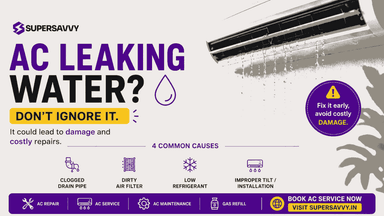
Water leaking indoors. When a frozen coil melts, the water can overflow the tray — see our guide on why an AC leaks water for that side of the problem.
Low gas is also a frequent culprit behind an AC that runs but won't cool — one of the common reasons an AC stops cooling.
What causes a refrigerant leak
Corrosion over time. Copper coils and joints slowly corrode, especially in humid, coastal cities like Mumbai, until tiny pinholes form.
Vibration and loose joints. Years of running can loosen flare fittings and joints where the pipes connect.
Physical or installation damage. Pipes kinked, bent or nicked during a careless installation or shifting can leak later.
Age and wear. Older units and weak factory joints are simply more prone to developing leaks.
Why you should NOT try to refill the gas yourself
Refrigerant work is genuinely a professional job, not a DIY fix:
Refrigerant is stored and handled under pressure, and releasing it is unsafe and environmentally harmful.
The leak has to be located and sealed first — adding gas without that just wastes it.
The system must be vacuumed and then recharged to the exact amount by weight; guesswork damages the compressor.
The correct refrigerant type (R32, R410A or older R22) must match your unit.
Handling any of this without the right gauges, vacuum pump and leak detector isn't something to attempt at home.
How a technician fixes it
A proper gas leak repair usually follows these steps:
Find the leak using a soap-bubble test or an electronic leak detector.
Repair or replace the leaking joint, flare or damaged section of coil/pipe.
Vacuum the system to remove air and moisture.
Recharge with the correct refrigerant to the right weight, then test the cooling.
What you can do meanwhile: if you see the coil icing up, switch the AC off so the compressor isn't strained and the melt-water doesn't leak, note the signs, and book a technician rather than running it low on gas.
Getting it repaired with Supersavvy
Supersavvy provides AC repair, including gas-related work, across Mumbai and our other service cities using in-house, trained technicians. As a reference, gas charging starts from an indicative ₹899, though a full leak repair also involves locating and sealing the leak, so the technician confirms the price after inspecting the unit. Any repairs carried out are covered by a 90-day warranty, subject to the applicable terms. If the signs above sound familiar, you can book a professional AC gas leak repair online in a few minutes.
Frequently asked questions
Does an AC use up gas over time?No. The refrigerant circulates in a sealed system and isn't consumed. If the level is low, it has leaked and the leak needs to be fixed — not just refilled.
How do I know if my AC has a gas leak?The usual signs are weak cooling, ice or frost on the copper pipes, a faint hissing sound, longer running times and higher electricity bills.
Can I refill the AC gas myself?No. Refrigerant is handled under pressure and the leak must be found and sealed first. It needs a trained technician with a leak detector, vacuum pump and the correct refrigerant — doing it yourself is unsafe.
Is it worth just topping up the gas?Not on its own. Without repairing the leak, the fresh gas escapes again within weeks. Fixing the leak first is what makes the recharge last.
Which refrigerant does my AC use?Newer units usually run on R32 or R410A, older ones on R22. It's printed on the unit's nameplate, and the technician recharges with the matching type.
In short: weak cooling, icing and a creeping electricity bill often mean a refrigerant leak, not a unit that simply "needs gas". Have the leak found and sealed, then recharged correctly, and the cooling comes back for good rather than for a few weeks.
Need an AC Today?
Buy refurbished, pre-owned, or second-hand ACs at the best rates in Mumbai.
✅ Free installation support
✅ Instant buyback available
📞 Call/WhatsApp: +91 7098110110
















Navigation links
HomeAbout UsMy BookingsBlogsContact UsRaise a ComplaintComplaintsPartner AppTechnical AcademySupport ChatAll Rights Reserved ©
