buy second hand air conditioner
Is a Second-Hand AC Worth It? A Practical Buyer's Guide for India
Thinking of buying a used AC? Here's how to tell if a second-hand AC is worth it — a practical inspection checklist, age and refrigerant tips, and the real total cost.
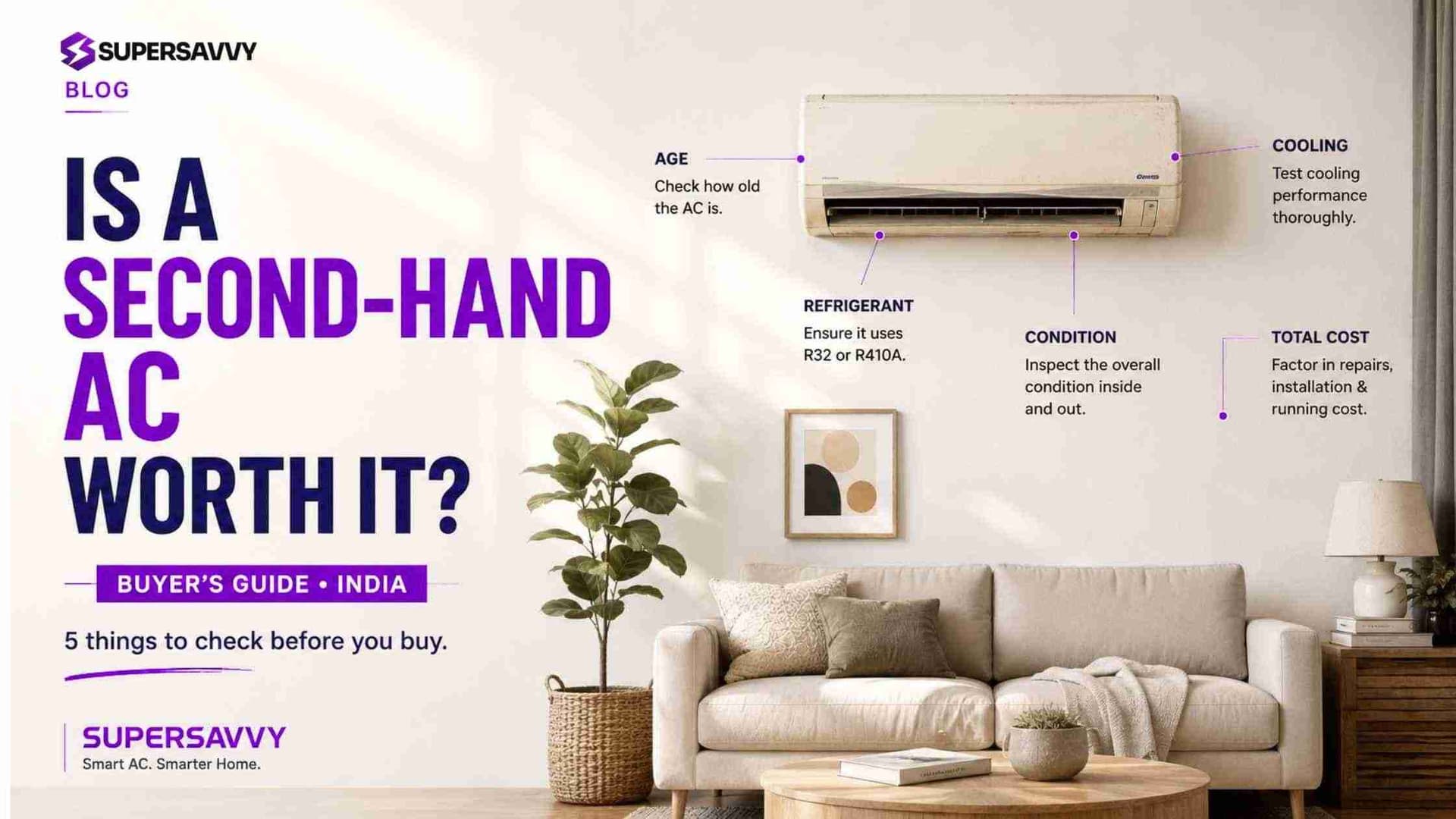
Is a Second-Hand AC Worth It? A Practical Buyer's Guide for India
A new air conditioner is a big spend, so a second-hand or refurbished unit at a fraction of the price is tempting — especially for a rented flat, a spare room, or a first AC on a tight budget. But the obvious worry stops most people: is a second-hand AC actually worth it, or are you just buying someone else's problem?
The honest answer: a used AC can be a genuinely smart buy — if you check the right things before paying. This guide walks you through exactly what to look for, so you can decide with confidence.
The short answer
A second-hand AC is usually worth it when the unit is reasonably recent, in good working condition, and priced sensibly. It is a poor deal when it is very old, hasn't been tested, uses outdated refrigerant, or comes with no support if something goes wrong. The trick is knowing how to tell the difference — which is what the checklist below is for.
Second-hand vs refurbished — know the difference
These two words are often used loosely, but they matter:
Second-hand (as-is): sold in whatever condition it is in. Usually the lowest price, but the risk is entirely yours.
Refurbished: inspected, cleaned, tested and, where needed, repaired before resale. It usually costs a little more than raw second-hand, but you get a unit that has actually been checked.
For most buyers, a properly refurbished AC is the safer middle ground between a brand-new unit and an untested used one.
The checklist: what to check before buying a used AC
Whether you buy from a shop, a dealer or an individual, run through these before you pay:
Cooling performance. Insist on seeing it running. It should cool the room quickly and steadily — not just blow air that is slightly cool.
Age of the unit. Find the nameplate (usually on the side or back) and check the manufacturing date. Most ACs last around 10 years, so a unit already 8–9 years old is near the end of its life.
Refrigerant (gas) type. Older units may use R22, which is being phased out — top-ups get expensive and harder to find. Newer, more efficient refrigerants like R32 are a better bet. Check the label on the outdoor unit.
Compressor and noise. The compressor is the costliest part to replace. Listen for loud rattling, grinding or heavy vibration.
Coils and rust. In humid, coastal cities like Mumbai, check the coils and outdoor unit for rust or corrosion.
Signs of a gas leak. Oily patches around the coils or joints can indicate a refrigerant leak.
Water drainage. Confirm it drains properly and doesn't leak water indoors.
Electrical safety. Wiring, plug and switches should be intact and safe — not taped-up or improvised.
Energy efficiency. Older, lower-star units cost more to run every month. A cheaper unit that guzzles electricity may not save you money overall — see our guide on running your AC more efficiently.
Type and fit. Window or split? Make sure it suits your room and that installation at your home is practical.
If the seller won't let you switch it on and inspect it, treat that as a red flag.
Look at the total cost, not just the sticker price
The purchase price is only part of the picture. Budget realistically for:
A possible gas top-up if cooling is weak.
Installation at your home (especially for a split AC).
Any small repairs or a first service to get it in good shape.
Add these up and compare against a new entry-level unit. Often a good refurbished AC still wins clearly on value — but do the maths rather than assume.
When a second-hand AC makes sense — and when it doesn't
A good idea when: you want to save money, need cooling for a rented or temporary home, or want a second AC for a spare room — and you can inspect a decent, reasonably recent unit.
Better to buy new when: the only used options are old or untested, you want the latest efficiency to keep bills low over years of heavy use, or you simply want maximum peace of mind. If you're deciding on a make, our guide to AC brands in India can help.
Buying a refurbished AC with Supersavvy
Supersavvy sells refurbished ACs, including window and split units. Indicative starting prices are around ₹9,999 for a window AC and about ₹14,000 for a 1.5 ton split — the final price depends on brand, model, capacity, age and condition, and available models vary. Pricing is shared transparently, and where it is operationally possible Supersavvy aims to deliver available products the same day.
Already have an old AC you want to replace? Supersavvy also buys used ACs, so you can sell your old AC and put that value towards a newer one. You can browse refurbished ACs at Supersavvy to see current options and prices.
Frequently asked questions
Is it safe to buy a second-hand AC?Yes, if you check it properly. Test the cooling, check the age and refrigerant type, listen to the compressor, and look for rust, leaks and safe wiring. A refurbished unit that has already been inspected lowers the risk further.
How old is too old for a used AC?Most ACs last around 10 years. A unit that is already 8–9 years old is near the end of its life, so it's usually worth paying a little more for something newer.
What's the difference between second-hand and refurbished?Second-hand is sold as-is. Refurbished has been inspected, cleaned, tested and repaired where needed before resale — generally the safer choice.
Will a used AC come with a warranty?It varies by seller, so always ask what after-sales support is offered before buying. Confirm the current terms directly with the seller.
Is a second-hand AC really cheaper than a new one overall?Usually yes, but include installation, any gas top-up and a first service in your comparison. A well-chosen refurbished unit typically still offers strong value.
Bottom line: a second-hand AC is worth it when you buy a reasonably recent, tested unit and factor in the full cost. Inspect before you pay, favour refurbished over untested as-is units, and you can cool your home for far less than the price of new.
Need an AC Today?
Buy refurbished, pre-owned, or second-hand ACs at the best rates in Mumbai.
✅ Free installation support
✅ Instant buyback available
📞 Call/WhatsApp: +91 7098110110


Navigation links
HomeAbout UsMy BookingsBlogsContact UsRaise a ComplaintComplaintsPartner AppTechnical AcademySupport ChatAll Rights Reserved ©
