refrigerator repair
Fridge Not Cooling? What to Check First
Fridge not cooling? The common causes, the safe checks you can do yourself, what not to attempt, and when to call a refrigerator technician.
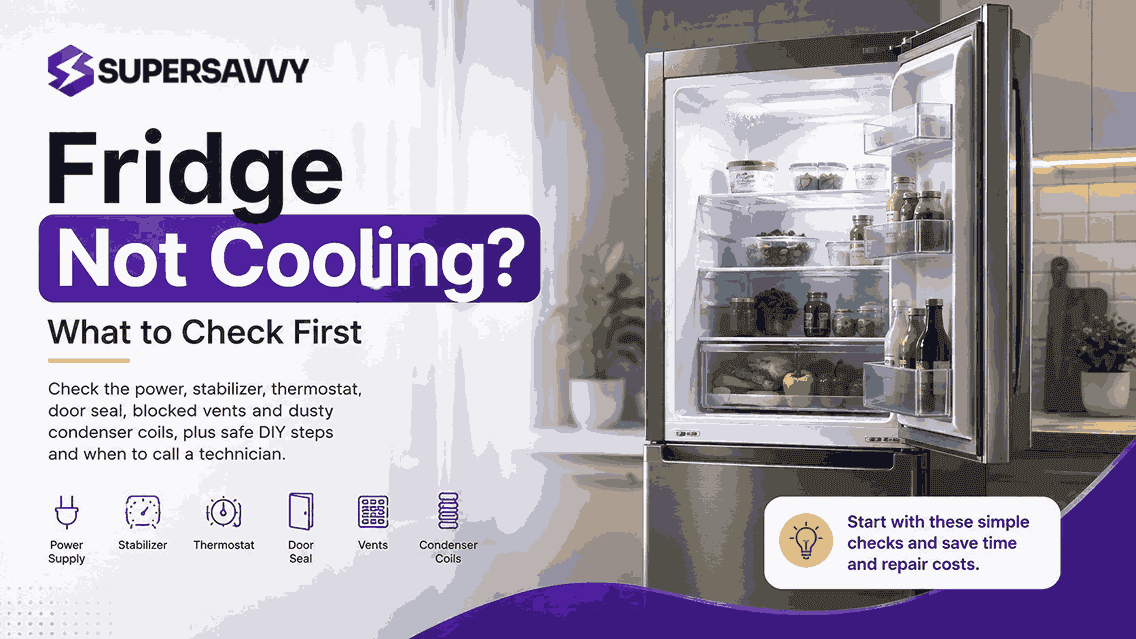
Fridge Not Cooling? What to Check First
You reach for a cold drink and realise the fridge feels lukewarm, or the milk has gone off overnight. Before you assume the worst, here's the reassuring part: a fridge that suddenly stops cooling is often caused by something simple — a power or stabilizer issue, a nudged temperature dial, a door that isn't sealing, or blocked air vents — and several of these you can check yourself in a few minutes.
This guide walks through the common reasons a fridge stops cooling, the safe checks you can do at home, what you should not attempt, and when it's time to call a technician.
The quick answer
Start with the easy things first: confirm the fridge is getting power (plug, socket, and stabilizer), check the temperature setting hasn't been changed, and make sure the door is closing fully. If the freezer is cold but the fridge compartment is warm, the problem is usually blocked air vents or a defrost fault, not a dead fridge. If it still won't cool after these checks — or the compressor is running constantly with no cooling — a sealed-system or electrical fault may need a professional.
Common reasons a fridge stops cooling
Power or stabilizer problem. A tripped socket, a switched-off point, or a faulty voltage stabilizer can cut power to the fridge without the light always making it obvious. In many Indian homes the fridge runs through a stabilizer, so that's a common first culprit.
Temperature dial changed. Someone may have turned the thermostat down while cleaning, or knocked it to a warmer setting. It's an easy thing to overlook.
Door not sealing. A worn or dirty door gasket, or an item sticking out and holding the door slightly open, lets cold air escape and warm, humid air in.
Blocked internal air vents. In frost-free and double-door models, cold air flows from the freezer into the fridge through vents. Overpacking the shelves or blocking those vents leaves the fridge warm while the freezer stays cold.
Dusty condenser coils. The coils at the back or underneath shed heat. In dusty Indian conditions they clog over time, so the fridge can't cool efficiently — it runs longer and struggles, especially in summer.
Poor ventilation or heat nearby. A fridge pushed tight against the wall, sitting in direct sunlight, or next to the stove has to work much harder to stay cold.
Recently loaded or restarted. After a long power cut, or when you've just packed in a lot of warm food or hot leftovers, the fridge needs a few hours to recover before it feels properly cold again.
Defrost or evaporator fault. In frost-free fridges, a failed defrost part can let ice build up over the evaporator, so cooling drops off gradually over a few days.
Refrigerant leak or compressor fault. If cooling fades to nothing, the compressor won't start, or it runs non-stop while staying warm, the sealed refrigerant system or compressor may be at fault. This is a technician job, not a DIY fix.
Simple checks you can do yourself
These are safe for any home user. Where a check involves cleaning at the back, switch the fridge off and unplug it first.
Confirm the power. Check the plug is firmly in, the socket is switched on, and the stabilizer's indicator shows it's working. Try the same socket with another appliance if you're unsure.
Check the temperature setting. Make sure the dial or digital setting hasn't been moved to a warmer level or a special mode, and set it back to a normal cooling position.
Inspect the door seal. Close the door on a slip of paper — if it slides out easily, the gasket isn't sealing. Wipe the gasket clean, and make sure no container is stopping the door from shutting fully.
Don't overpack, and keep vents clear. Leave gaps for air to circulate and make sure food isn't blocking the internal vents between the freezer and fridge sections.
Give it time. After a power cut or a big shop, wait a few hours before judging whether it's cooling. Avoid loading lots of hot food at once.
Clean the condenser coils. With the fridge unplugged, gently dust or vacuum the coils at the back or underneath, and pull the fridge slightly away from the wall for better airflow.
What you should NOT try yourself
To stay safe and avoid turning a small problem into an expensive one, leave these to a technician:
Anything involving refrigerant or "gas filling" — the sealed system must be handled by a professional with the right equipment.
Replacing the compressor, relay, thermostat, fan motor or control board.
Chipping away ice with a knife or sharp tool, which can puncture the cooling system.
Any repair involving the fridge's internal electricals.
When to call a professional
Book a technician if:
The fridge still won't cool after you've checked the power, settings, door and vents.
The freezer works but the fridge stays warm, and clearing the vents didn't help.
The compressor won't start, or runs constantly without cooling and feels very hot.
There's a clicking sound with no cooling, a burning smell, or water or oil leaking underneath.
Cooling has slowly faded to nothing, which can point to a refrigerant leak.
These usually point to a defrost, electrical, compressor or refrigerant fault that needs proper diagnosis and parts. It's worth understanding the difference between a quick DIY check and a sealed-system repair — the first saves you a call-out, the second protects your fridge from further damage.
Getting it repaired with Supersavvy
Supersavvy provides refrigerator repair across Mumbai and our other service cities, using in-house, trained technicians. Pricing is shared transparently before or during the work, and any repairs carried out are covered by a 90-day warranty, subject to the applicable terms. Where it is operationally possible, we aim to arrange a technician visit within approximately one hour of booking. You can book a refrigerator repair with Supersavvy online in a few minutes.
Dealing with another appliance too? Our guide on what to check when a washing machine won't drain follows the same safe, step-by-step approach.
Frequently asked questions
Why is my fridge not cooling but the freezer is working?In frost-free and double-door fridges the cold air comes from the freezer through internal vents. If those vents are blocked by food, or a defrost part has failed and iced up, the freezer stays cold while the fridge compartment turns warm. Clear the vents first; if it persists, it needs a technician.
Why did my fridge suddenly stop cooling?Most often a power or stabilizer issue, a temperature dial that's been changed, or a door that isn't sealing. Check those before assuming a major fault.
Can I fix a fridge that's not cooling myself?You can safely check the power and stabilizer, the temperature setting, the door seal and vents, and clean the condenser coils. Anything involving refrigerant, the compressor or internal electricals should be left to a technician.
How long does a fridge take to cool down after a power cut?Usually a few hours. Keep the door closed as much as possible, don't overload it with warm food, and give it time before deciding it isn't working.
Does a fridge not cooling mean it needs gas?Not always. Many cases are power, settings, door or ventilation problems. A genuine refrigerant leak usually shows as cooling fading away gradually, and only a technician can confirm and fix it safely.
In short: check the power and stabilizer, the temperature setting, the door seal and the air vents, and keep the condenser coils clean. That resolves many cases. When the compressor, defrost system or refrigerant is involved, a trained technician is the safe and reliable fix.
Need an AC Today?
Buy refurbished, pre-owned, or second-hand ACs at the best rates in Mumbai.
✅ Free installation support
✅ Instant buyback available
📞 Call/WhatsApp: +91 7098110110

Navigation links
HomeAbout UsMy BookingsBlogsContact UsRaise a ComplaintComplaintsPartner AppTechnical AcademySupport ChatAll Rights Reserved ©
