washing machine repair
Washing Machine Not Draining? Causes and Simple Fixes
Washing machine not draining? The common causes, the safe checks you can do yourself, what not to attempt, and when to call a technician.
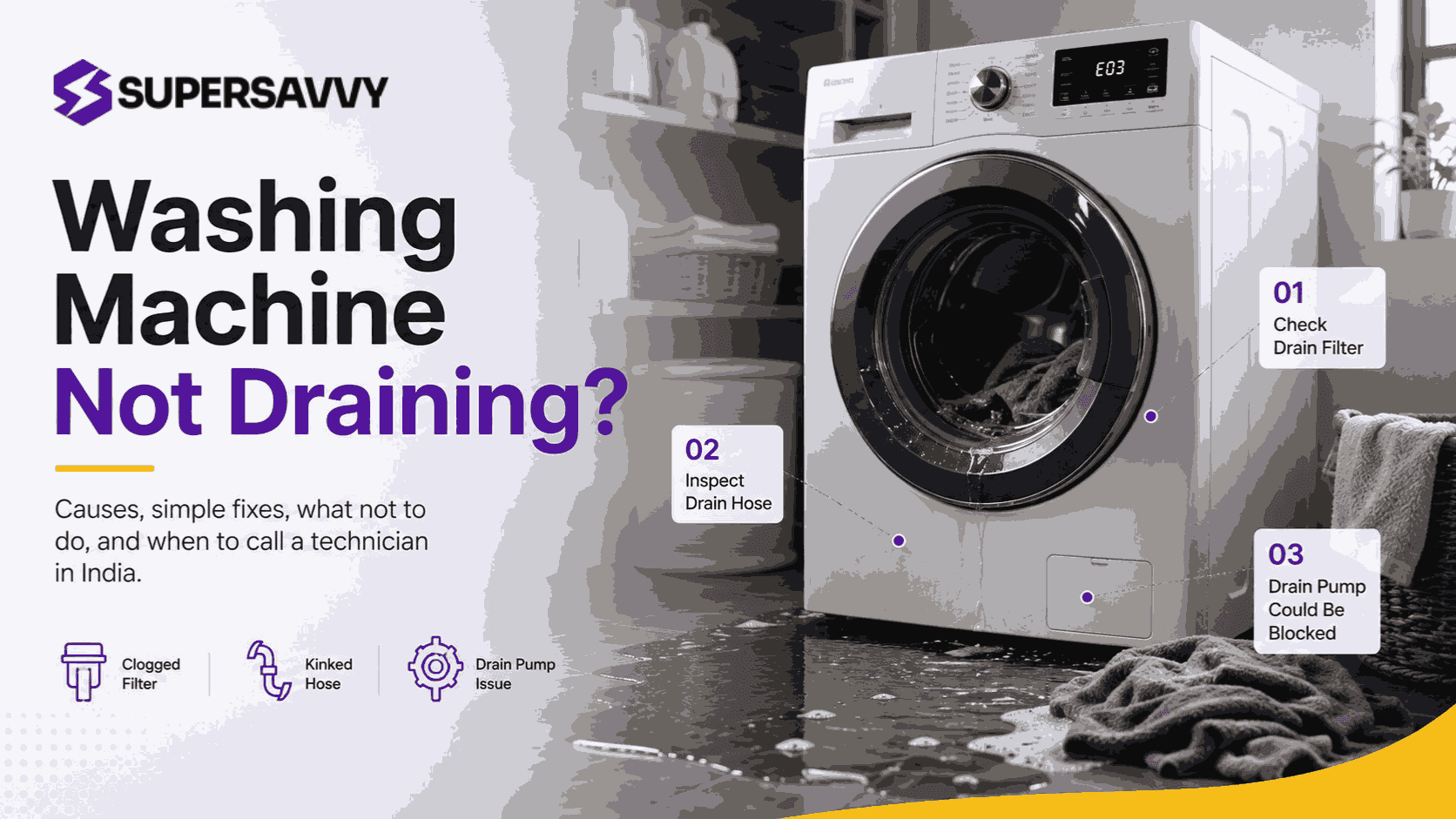
Washing Machine Not Draining? Causes and Simple Fixes
You open the washing machine after a cycle and find your clothes sitting in a tub of dirty water. Annoying — but before you assume the machine is finished, here's the good news: a washing machine that won't drain is usually caused by a simple blockage, and quite often you can fix it yourself in a few minutes.
This guide explains the common reasons, the safe checks you can do at home, what you should not attempt, and when it's time to call a technician.
The quick answer
Most drainage problems come down to a clogged filter, a blocked or kinked drain hose, or a hose placed at the wrong height. These are easy to check. If the water still won't drain after that — or you hear the pump humming or grinding without draining — the drain pump or an electrical part may have failed, and that needs a professional.
Common reasons a washing machine won't drain
Clogged drain-pump filter. The most common cause. Lint, coins, buttons, hair and small bits of cloth collect here over time until water can't get through. Fully-automatic front-load machines have this filter behind a small panel at the bottom front.
Kinked or blocked drain hose. If the hose is twisted, crushed behind the machine, or clogged, water can't flow out.
Drain hose at the wrong height. If the outlet is placed too high or pushed too far into the drain, the machine may struggle to pump water out.
Failing drain pump. If the filter and hose are clear but it still won't drain, the pump may be worn. Tell-tale signs are a humming or grinding noise, or silence during the drain cycle.
Door or lid switch fault. A front-loader won't drain if the door lock doesn't confirm the door is shut; many top-loaders behave the same way with a faulty lid switch.
Overloading or an unbalanced load. A heavy, bunched-up load can interrupt the drain and spin, especially in top-load and semi-automatic machines.
Too much detergent (suds lock). Excess detergent creates thick foam that stops the machine draining properly.
Simple checks you can do yourself
These are safe for any home user. Switch the machine off and unplug it before you start, and keep a bucket and old towels handy — there will be water.
Check the drain hose. Straighten any kinks, make sure it isn't crushed behind the machine, and confirm it isn't jammed too deep into the drain or placed too high.
Clean the filter (front-load machines). Open the small panel at the bottom front, place a shallow tray or towels underneath, slowly unscrew the filter cap to let water drain out, remove any lint, coins or debris, rinse it, and screw it back firmly.
Reduce and rebalance the load. Take out some clothes, spread them evenly, and run the drain or spin cycle again.
Use the right amount of detergent. If you suspect too much foam, run a short rinse-and-spin without detergent.
In India, machine types differ — a semi-automatic (twin-tub) machine drains the wash tub through a separate hose, while fully-automatic top-load and front-load machines use a pump. The hose and load checks apply to all of them; the bottom filter is mainly on front-load units.
What you should NOT try yourself
To stay safe and avoid making things worse, leave these to a technician:
Opening up or wiring the drain pump.
Replacing the pump, drive belt, motor or control board.
Any repair involving the machine's internal electricals.
Never work on the machine while it is plugged in, and don't force a jammed drum or pump.
When to call a professional
Book a technician if:
It still won't drain after you've checked the hose and cleaned the filter.
The pump hums or grinds but no water leaves the machine.
Water is leaking from the body of the machine.
There's a burning smell, or the machine repeatedly shows a drain error.
These usually point to a pump, switch or electrical fault that needs proper diagnosis and parts.
Getting it repaired with Supersavvy
Supersavvy provides washing machine repair across Mumbai and our other service cities, using in-house, trained technicians. Pricing is shared transparently before or during the work, and any repairs carried out are covered by a 90-day warranty, subject to the applicable terms. Where it is operationally possible, we aim to arrange a technician visit within approximately one hour of booking. You can book a washing machine repair with Supersavvy online in a few minutes.
Frequently asked questions
Why is my washing machine not draining?Most often a clogged filter, or a kinked, blocked or badly positioned drain hose. If those are clear, it may be the drain pump, the door/lid switch, or too much detergent.
Can I fix a washing machine that won't drain myself?You can safely check the drain hose, clean the front-load filter, rebalance the load and reduce detergent. Anything involving the pump, belt or electricals should be left to a technician.
Where is the drain filter on a washing machine?On fully-automatic front-load machines it's usually behind a small panel at the bottom front. Top-load and semi-automatic machines rely more on the drain hose and pump than a user-accessible filter.
Is it safe to run the machine again after it won't drain?Only after you've switched it off, cleared the obvious blockages and drained the standing water. If it still won't drain or you hear the pump struggling, stop and call a professional.
My semi-automatic machine won't drain — what should I check?Check that the drain hose is lowered and not kinked or blocked, and that the load isn't jammed. If the wash tub still holds water, the drain valve or pump may need a technician.
In short: start with the hose and the filter, rebalance the load, and cut back on detergent. That solves most cases. When the pump or electricals are involved, a trained technician is the safe and reliable fix.
Need an AC Today?
Buy refurbished, pre-owned, or second-hand ACs at the best rates in Mumbai.
✅ Free installation support
✅ Instant buyback available
📞 Call/WhatsApp: +91 7098110110

Navigation links
HomeAbout UsMy BookingsBlogsContact UsRaise a ComplaintComplaintsPartner AppTechnical AcademySupport ChatAll Rights Reserved ©
