sell old ac
How Much Is My Old AC Worth?
What determines your old AC's buyback value — condition, age, type, tonnage, star rating, brand and refrigerant — plus how to prepare it and get a quote.
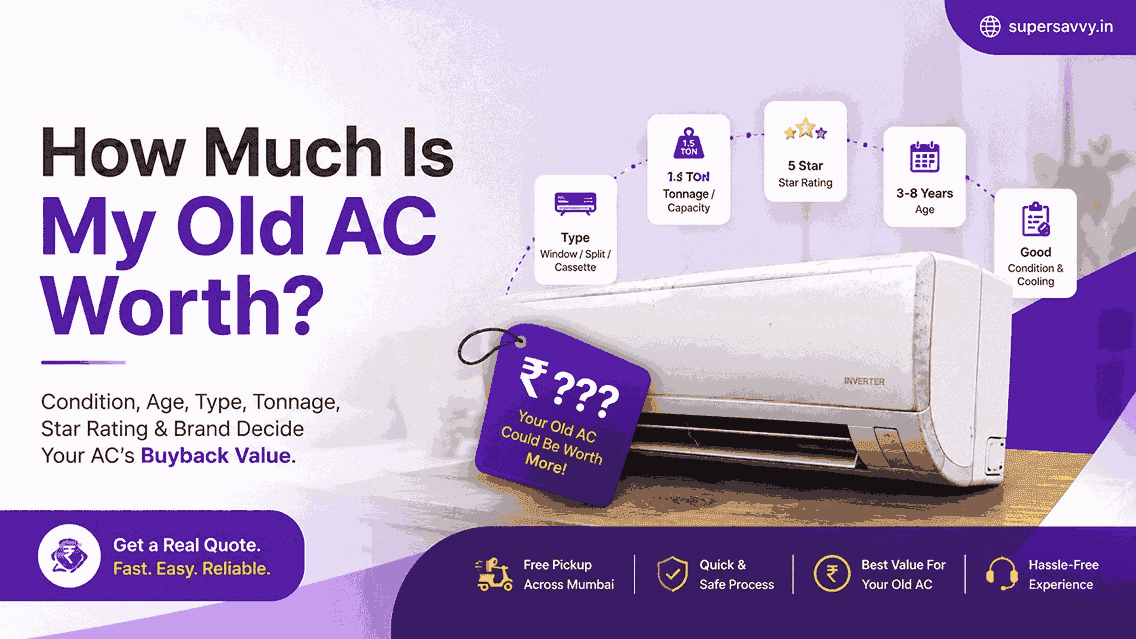
How Much Is My Old AC Worth?
You're upgrading, moving, or just clearing space, and the old air conditioner on the wall suddenly raises a question: how much is my old AC worth? The honest answer is that there's no single number — the value depends on a handful of practical factors. Once you know what they are, you can judge roughly where your unit stands and get a proper quote instead of guessing.
This guide explains what actually decides an old AC's buyback value, how a working unit differs from one that's only fit for scrap, what to note down before asking for a price, and how Supersavvy values and buys old ACs.
The quick answer
An old AC is worth more when it still cools well, is relatively recent, is a common tonnage and type, and is in clean physical condition. Value drops with age, faults, rust and missing parts. A working or easily repairable AC carries resale or refurbishment value; a dead unit is usually priced for its scrap and salvageable parts. Everything below is about working out which side of that line your unit sits on.
What determines your old AC's value
Working condition. This is the biggest factor. An AC that cools properly is worth far more than one that trips, leaks or won't switch on. Be honest about faults — they affect the price, but hiding them just leads to a revised quote after inspection.
Age. As a rough rule, the older the unit, the lower the value. Compressors and coils wear, and efficiency drops, so a two- or three-year-old AC fetches more than a ten-year-old one.
Type and tonnage. Split and window ACs are valued differently, and tonnage (typically 1 ton, 1.5 ton or 2 ton) matters because it decides which rooms the unit suits and how much demand there is for it.
Star rating and efficiency. A higher star rating means lower running cost, which keeps a used unit more desirable in the resale market.
Brand and model. Well-known brands with easy spare-part availability tend to hold value better, because they're simpler to refurbish and resell.
Refrigerant type. Newer refrigerants such as R32 and R410A are preferred; older R22 units are gradually being phased out, which can pull value down.
Physical condition. Rust, dents, damaged coils or a sun-faded outdoor unit reduce value — especially in humid, coastal cities like Mumbai where corrosion is common.
Completeness. Having the remote, the outdoor unit, the mounting hardware and a working stabilizer makes the package more attractive than a bare indoor unit.
Working AC vs scrap: two different values
It helps to understand the difference between the two ways an old AC is valued:
Resale / buyback value applies when the AC works, or needs only minor repair. It can be cleaned, serviced or refurbished and sold on, so it's worth the most.
Scrap / parts value applies when the unit is beyond economical repair. Here the worth comes from reusable parts and metal, so the figure is lower — but it's still better than paying to dispose of it.
If you're not sure which category yours falls into, that's normal. A quick inspection settles it, and it's worth getting a quote for the working scenario even if you suspect the unit is old.
What to check before you ask for a quote
A few minutes of preparation gets you a faster, more accurate price. Note down the details from the nameplate sticker on the indoor or outdoor unit:
Brand and model number.
Type (split or window) and tonnage.
Star rating and the manufacturing year (for age).
Refrigerant type, usually printed as R22, R32 or R410A.
Any known faults, and whether the remote and outdoor unit are present.
One safety note: don't try to uninstall the AC yourself to inspect it. Removing a split AC involves pumping down the refrigerant safely, and doing it wrong can release gas or damage the unit — leave the uninstallation to a technician.
How Supersavvy values and buys your old AC
Supersavvy offers a buyback service for old ACs. The value is worked out from the unit's condition, model, age and current market value, along with other relevant factors — the same points covered above. Rather than quoting a blind figure, the fair approach is to assess the specific unit and give you an indicative price for it. You can get a buyback quote for your old AC and, where available, arrange the assessment and collection.
If you're selling because you want a cooler, more efficient replacement, it can be worth pairing the two decisions: put the buyback value towards an upgrade and buy a refurbished AC instead of a brand-new one. If that route interests you, it also helps to understand the difference between second-hand and refurbished ACs before you choose.
Frequently asked questions
How is the value of an old AC decided?Mainly by working condition and age, then type and tonnage, star rating, brand, refrigerant type and physical condition. Market demand for that particular model also plays a part.
Can I sell an AC that isn't working?Usually yes. A non-working unit is valued for its reusable parts and scrap rather than for resale, so the figure is lower — but it still beats paying to dispose of it. A working or repairable unit is worth more.
Does a split AC sell for more than a window AC?Not automatically. It depends on tonnage, condition, age and how much demand there is for that type. A well-kept window AC can be worth more than a faulty, older split unit.
What details do I need to get a quote?The brand, model, type, tonnage, star rating, approximate age and refrigerant type — all usually on the nameplate — plus any faults and whether the remote and outdoor unit are present.
Should I repair my old AC before selling it?Sometimes a small, cheap fix noticeably lifts the value; sometimes the repair costs more than it adds. If in doubt, get a quote for the unit as-is before spending anything on it.
In short: your old AC's worth comes down to condition, age, type and demand. Gather the nameplate details, be honest about any faults, and get an indicative quote for the actual unit rather than relying on a guess.
Need an AC Today?
Buy refurbished, pre-owned, or second-hand ACs at the best rates in Mumbai.
✅ Free installation support
✅ Instant buyback available
📞 Call/WhatsApp: +91 7098110110

Navigation links
HomeAbout UsMy BookingsBlogsContact UsRaise a ComplaintComplaintsPartner AppTechnical AcademySupport ChatAll Rights Reserved ©
